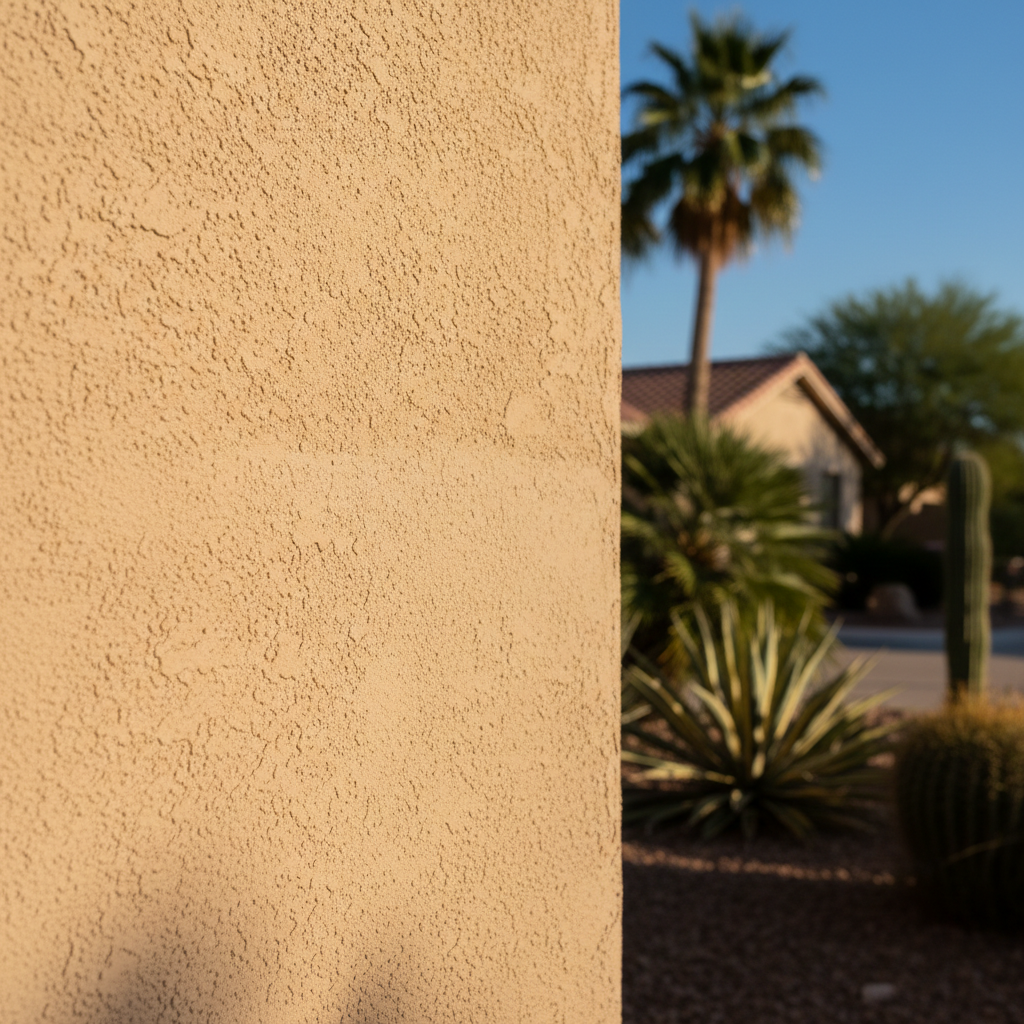
Stucco's a great choice for homes here in Mesa, especially with our desert climate. It's durable, looks good, and holds up well to the sun. But like anything else, it's not invincible. Over time, you might see cracks, dings, or water stains. When that happens, homeowners often have a lot of questions. I get 'em all the time. So, I figured I'd put together some straight answers to the most common stucco repair questions I hear.
What's causing these cracks in my stucco?
This is probably the number one question I get. Cracks are a fact of life with stucco, but understanding why they happen helps you know what kind of repair you're looking at. Most of the time, we're talking about hairline cracks. These are usually just surface-level and come from the stucco drying out, minor settling of your house, or temperature fluctuations. Think of our hot Mesa summers and cooler winters – that expansion and contraction can cause small stress cracks.
Then you've got bigger cracks. If you see cracks that are wider than a credit card, or if they're running in a stair-step pattern, that could be a sign of something more serious. We're talking about structural issues, like foundation movement. That's not a stucco problem, that's a house problem, and the stucco is just showing you the symptoms. Water intrusion can also cause cracks, especially if it freezes and expands behind the stucco, though that's less common here in the Valley of the Sun. We've also seen cracks from poor installation, like not having enough control joints, or applying stucco too thick, too fast, or in the wrong conditions. It's all about diagnosing the root cause before we even think about patching it up.
Can I just patch it myself, or do I need a pro?
Look, I'm a big believer in DIY for some things. Changing a light fixture? Go for it. Painting a bedroom? Knock yourself out. But stucco repair? That's a different beast. For tiny, hairline cracks, you might be able to get away with a specialty caulk or a very thin layer of patching compound. But even then, matching the texture and color is incredibly difficult for an untrained eye. Stucco isn't just a flat surface; it has a specific texture, whether it's a smooth Santa Barbara finish or a rougher dash coat. Getting that to blend seamlessly takes practice and specialized tools.
If you've got anything more than a tiny surface crack, or if there's any sign of water damage, you absolutely need a professional. Improper repairs can actually make things worse. You could trap moisture, create an uneven surface that stands out like a sore thumb, or even compromise the integrity of your wall system. We've seen plenty of homes in neighborhoods like Dobson Ranch where a bad patch job ended up costing the homeowner more to fix later than if they'd just called us in the first place.
How long does stucco repair usually take?
That really depends on the extent of the damage. A small patch job for a few hairline cracks might only take a few hours of actual work, spread over a day or two to allow for drying times between coats. If we're talking about a larger section, say a whole wall that needs re-stuccoing because of significant water damage or delamination, that's a multi-day project. We'd have to remove the old stucco, inspect the substrate, make any necessary repairs to the sheathing or framing, apply new lath, scratch coat, brown coat, and then the finish coat. Each of those layers needs time to cure properly.
Weather plays a big role too. We can't apply stucco in the rain (not that we get much of that here in Mesa) or when it's too hot and windy, which can dry out the stucco too quickly and lead to more cracking. So, while we always aim to work efficiently, quality and proper curing are our top priorities. We'll give you a clear timeline upfront once we assess the damage.
What about matching the color and texture? Is that even possible?
This is probably the trickiest part of any stucco repair, and it's where experience really shines. Yes, it's possible to get a very close match, but 'perfect' is a strong word, especially for older stucco. Over time, stucco fades due to sun exposure, dust, and general weathering. Your original stucco color from 10 or 20 years ago isn't the same color it is today.
What we do is take samples of your existing stucco, both for color and texture. We then mix custom batches to get as close as humanly possible. For texture, it's all about the application technique and the tools used. We've got guys who've been doing this for decades, and they can mimic just about any finish you throw at them. Sometimes, for the best blend, especially on a prominent wall, we might recommend painting the entire wall or even the whole house after the repair is done. That way, everything looks uniform and fresh. But our goal is always to make the repair blend in so well you can't tell where the old ends and the new begins.
How much does stucco repair cost?
Ah, the million-dollar question! And unfortunately, there's no single answer. It's like asking how much a car costs – depends on the make, model, and condition. For stucco, it depends on:
- The size of the damaged area: A small patch is obviously less than a large section.
- The type of damage: Surface cracks are simpler than structural issues requiring substrate repair.
- The complexity of the texture: A smooth finish can be more challenging to blend than a simple sand finish.
- Accessibility: Is the damage on a ground-level wall or up high on a two-story home requiring scaffolding?
- Materials needed: Just patching compound, or do we need new lath, paper, and multiple coats?
What I can tell you is that at Mesa Stucco & Plastering, we provide a detailed, transparent estimate after a thorough inspection. We'll break down the costs so you understand exactly what you're paying for. We don't do hidden fees or surprise charges. We believe in honest work for an honest price.
What's the best way to prevent future stucco damage?
Prevention is always better than repair, right? Here are a few things you can do:
- Keep an eye on your gutters and downspouts: Make sure they're clear and directing water away from your foundation and stucco walls. Water is stucco's biggest enemy.
- Trim back landscaping: Bushes and trees too close to your house can hold moisture against the stucco and also rub against it, causing abrasion.
- Check your irrigation: Make sure your sprinklers aren't constantly spraying your stucco walls. That constant moisture can lead to efflorescence, staining, and eventually damage.
- Seal cracks early: If you see small hairline cracks, address them. Don't let them sit and become entry points for water.
- Regular inspections: Just walk around your house a couple of times a year. Look for anything out of the ordinary – new cracks, discoloration, soft spots. Catching problems early saves you money and headaches down the road.
Taking care of your stucco is an investment in your home. If you've got questions or need an estimate, don't hesitate to give us a call. We're here to help keep your Mesa home looking its best.