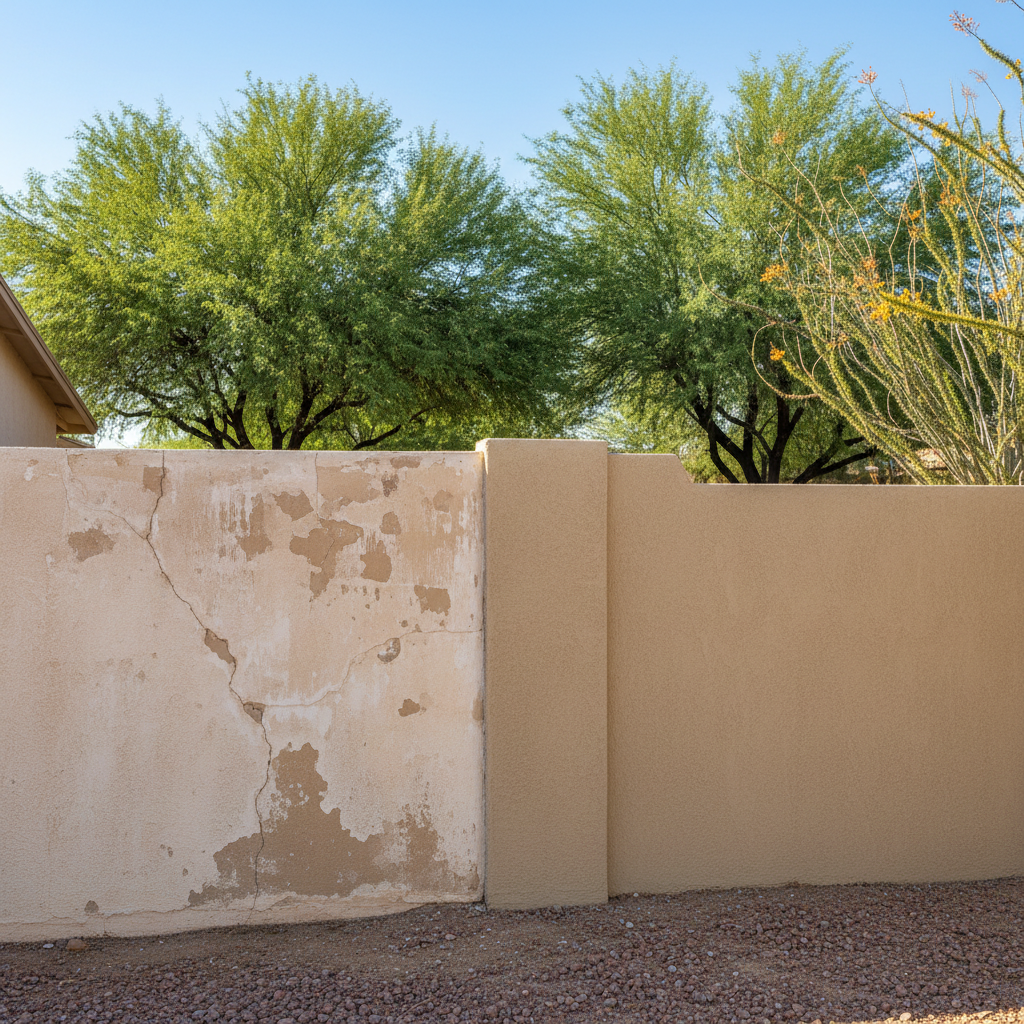
Alright, let's talk stucco repair. You've got a crack, a hole, or maybe some water damage on your wall, and you're probably wondering what the best fix is. Usually, when I get called out to a home here in Mesa, homeowners are trying to decide: should they just patch up the problem spot, or go for a bigger repair that might involve a whole section of the wall? It's a common question, and honestly, there's no single right answer for everyone. But I can tell you what I've seen work best in our Arizona climate.
Patching: The Quick Fix
Patching is pretty much what it sounds like: you're only fixing the damaged area. This usually means cleaning out the old, loose stucco, putting in new material, and then trying to blend it with the surrounding wall. It's often quicker, and on the surface, it looks cheaper.
When Patching Makes Sense:
- Small, Isolated Cracks: If you've got a hairline crack or a tiny impact ding that's clearly not spreading, a patch can work just fine.
- Surface-Level Damage: If the damage hasn't messed with the underlying lath or moisture barrier, a patch is a decent option. Think of a small chip from a stray baseball, for instance.
- Budget Constraints: Sometimes, you just need a temporary fix to get you by until you can afford a bigger project. I totally get it.
The Downsides of Patching:
Here's where things get tricky, especially in Mesa. Our intense sun and fluctuating temperatures really put stucco to the test. A patch, even if it's done well, often stands out. The new stucco will be a different age, and it'll cure differently. Even if we match the color perfectly, the texture rarely blends, especially on older homes with multiple layers of paint or weathering. You'll end up with a 'scar' on your wall. Plus, if the underlying issue isn't addressed — like a structural shift or ongoing water intrusion — that patch is just going to fail again, sometimes even worse than the original damage. What a headache!
Full Wall Repair (or Section Repair): The More Comprehensive Approach
When I talk about full wall repair, I don't always mean your entire house. Often, it means repairing a significant section, maybe from corner to corner or from a window line down to the ground. This involves removing the old stucco, checking the substrate, making any necessary repairs to the sheathing or moisture barrier, and then applying new stucco layers. It's a bigger job, no doubt about it.
When Full Wall Repair is Your Best Bet:
- Extensive Cracking or Spalling: If you've got a spiderweb of cracks, or large sections of stucco are crumbling off, you've gone past patch territory.
- Water Damage: This is a big one. If water has gotten behind your stucco, you've likely got rot or mold issues. Just patching the exterior won't fix the real problem, and you'll end up with bigger headaches down the line. We see this a lot with homes in areas like the Dobson Ranch neighborhood where older stucco systems might not have been installed with the best modern waterproofing.
- Failed Previous Patches: If you've got a wall that looks like a patchwork quilt from old repairs, it's time to consider a more uniform solution.
- Aesthetic Consistency: If you want your wall to look uniform and seamless, this is the way to go. You get a fresh, consistent finish across the entire section.
- Long-Term Durability: This approach addresses the root cause of the damage, ensuring a much more durable and lasting repair. You're essentially resetting that section of your wall.
The Downsides of Full Wall Repair:
The main drawback is cost and time. It's a bigger project, so it's going to cost more upfront and take longer to complete. You might also have more disruption around your home during the work.
My Recommendation for Mesa Homeowners
Look, I'm not going to sugarcoat it. For most stucco damage here in Mesa, especially anything beyond a tiny, superficial crack, I'm going to lean towards a full wall or section repair. Why? Because our climate is brutal. The sun bakes everything, and the occasional monsoon downpour can exploit any weakness. A patch, while seemingly cheaper, often leads to more problems and more money spent in the long run.
You want a repair that lasts, that protects your home, and that looks good. A full section repair, done right by a company like Mesa Stucco & Plastering, gives you that. It might be a bigger investment up front, but it's an investment in the longevity and appearance of your home. You won't be dealing with mismatched textures or new cracks forming right next to the old patch a year down the road.
Before you decide, get a professional opinion. We can come out, assess the damage, and give you an honest recommendation on whether a patch will actually hold up or if you're better off with a more comprehensive repair. Don't just slap a band-aid on a bigger problem; your home deserves a proper fix.