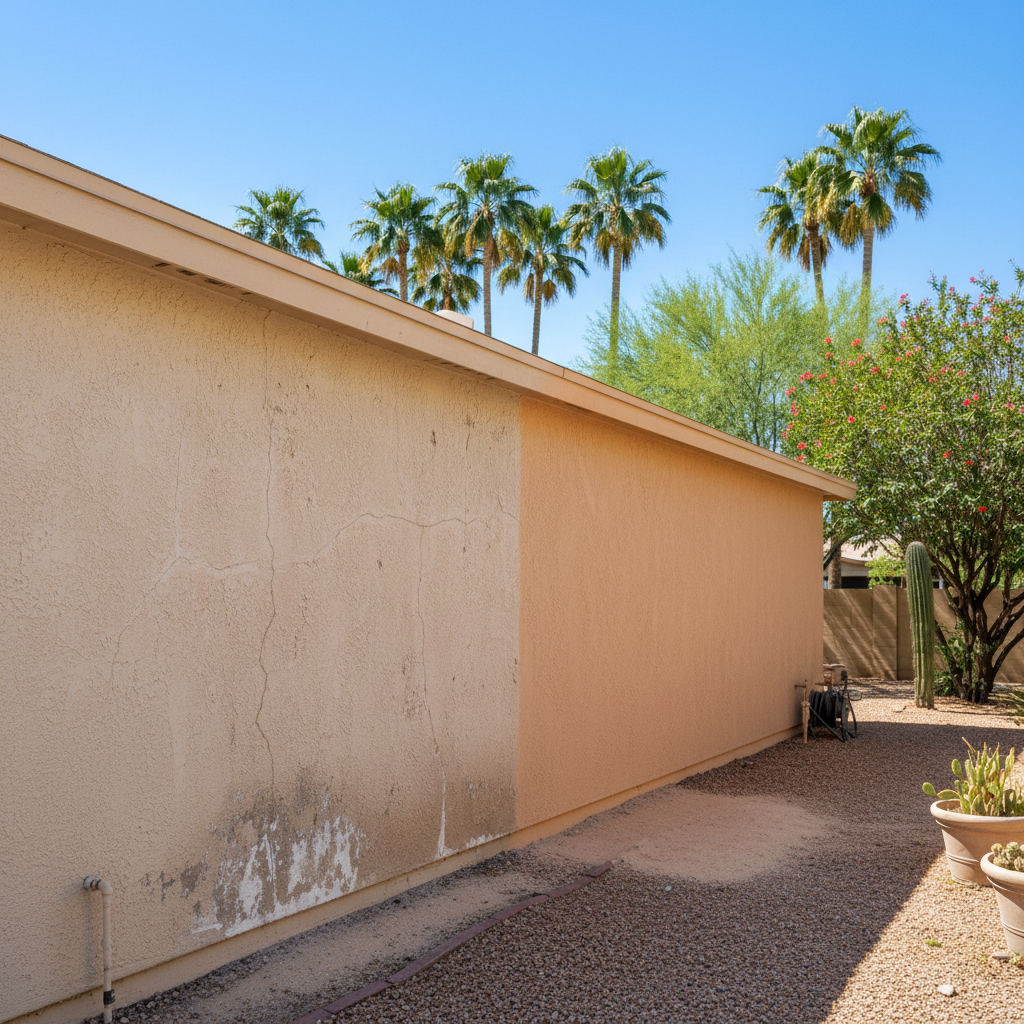
Alright, let's talk about painting your stucco. You've got a stucco home here in Mesa, and maybe it's looking a little faded, or you just want a new color. When it's time to put a fresh coat on that stucco, you're usually looking at two main options: regular acrylic latex paint or a specialized elastomeric coating. Now, I've been doing this for a long time with Mesa Stucco & Plastering, and I've seen both good and bad results from both, depending on what people picked and why. So, let's clear up the confusion, shall we?
Regular Acrylic Latex Paint: The Budget-Friendly Choice
This is what most folks think of when they say they're going to paint their house. It's easy to find, comes in a million colors, and most contractors are comfortable applying it. It's also usually the cheaper option upfront, which really appeals to a lot of homeowners.
Cost: Generally, acrylic latex paint costs less per gallon, and it often doesn't need super specialized application, so labor costs might be a bit lower too. If you're on a tighter budget, this is often the go-to.
Appearance: You can get a really nice, clean finish with acrylic paint. It looks sharp, and you've got endless color choices. Your stucco will definitely look fresh and new.
Durability & Maintenance: This is where you start seeing the trade-offs, especially in our Arizona climate. Acrylic paint forms a film on the surface of the stucco. It breathes, which is good, but it's not super flexible. Over time, with our intense sun and temperature swings (think scorching summer days and then cooler nights), stucco naturally expands and contracts. This movement can lead to hairline cracks in the paint film. Once those cracks show up, water can get in, and then you're looking at peeling, blistering, and fading much faster. You might find yourself needing to repaint every 5-7 years, sometimes sooner if it's a particularly exposed wall.
Elastomeric Coating: The Premium, Flexible Solution
Now, elastomeric coatings are a different beast entirely. Think of them as super-thick, super-flexible paint. They're specifically designed for masonry surfaces like stucco, and they've got properties that regular paint just can't match, especially for our desert conditions.
Cost: Right off the bat, I'll tell you elastomeric coatings cost more. The material itself is pricier per gallon, and it's a thicker product, so it takes more effort and skill to apply correctly. You're paying for a premium product and a more robust application, after all.
Appearance: Elastomeric coatings typically have a slightly thicker, more textured appearance than regular paint. It's not usually a perfectly smooth finish, but it still looks great and provides a uniform, rich color. The color holds up better too, resisting fading from our brutal sun.
Durability & Maintenance: This is where elastomeric coatings really shine. The