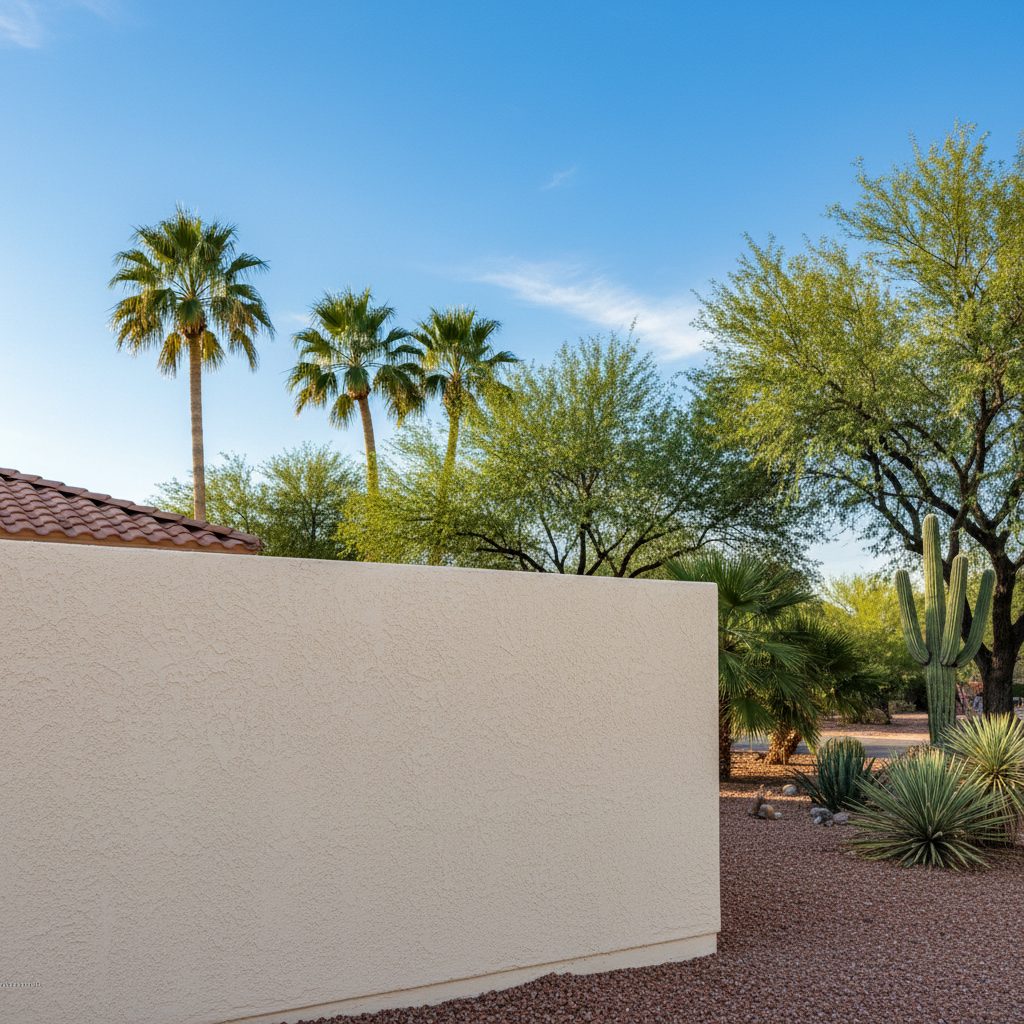
Have you looked closely at your exterior walls lately? Out here in Mesa, our stucco takes a brutal beating from the elements every single day. Between the scorching summer highs that push past 115 degrees and those sharp winter temperature drops, your walls are constantly expanding and contracting. That thermal shock creates stress, and if you ignore it, minor issues turn into costly structural headaches.
Mesa Stucco & Plastering sees what happens when desert weather catches homeowners off guard. Taking care of your exterior does not have to be a full-time job, but you do need a consistent routine.
What Regular Maintenance Looks Like
Keeping your stucco healthy comes down to a few simple habits spread out across the year:
- Walk your perimeter twice a year, especially right after the summer monsoons roll through, looking for hairline fractures or bulging areas.
- Wash away dust and alkaline efflorescence using low-pressure water so the salt deposits do not eat away at your finish coat.
- Keep your landscaping shrubs and sprinklers at least a couple of feet away from the house so moisture is not constantly hitting the base of your walls.
- Seal small hairline cracks promptly with a high-grade elastomeric patch before monsoon rains can force water inside.
Warning Signs That Demand Attention
You cannot catch everything, but certain red flags mean your stucco is failing faster than normal. If you spot spiderweb cracking or stair-step fractures near window corners, moisture is likely finding its way behind the barrier. Another warning sign is chalky, fading paint or a patchy discoloration that will not rinse off. That means the intense UV radiation has completely broken down your protective topcoat, leaving the cement vulnerable to moisture absorption. If you tap on the wall and hear a hollow sound, or notice soft spots where the stucco is bubbling away from the lath, you have a localized detachment issue that needs quick action.
When to Call a Professional
Some do-it-yourself patching is fine for tiny hairline cracks, but larger problems require professional intervention. If cracks are wider than a credit card, or if you see brown water staining bleeding through the finish, stop what you are doing and call a professional. Moisture intrusion in our desert environment can rust the underlying metal lath and cause massive sections to delaminate. Mesa Stucco & Plastering has fixed plenty of homes in neighborhoods like Dobson Ranch and Red Mountain Ranch where a small overlooked crack turned into a major remediation project. Getting an expert out early saves you from paying for a complete tear-out down the road.