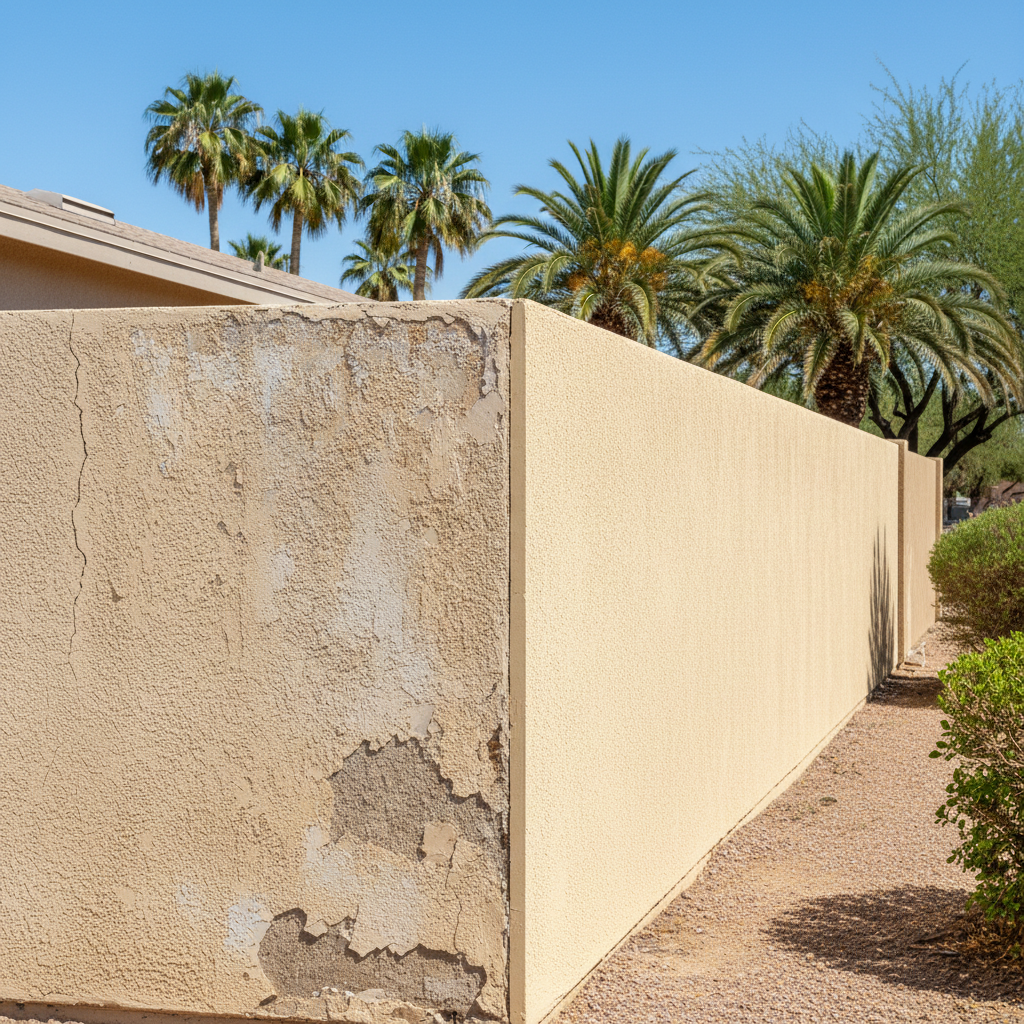
Alright, let's talk stucco. Specifically, the kind of stucco you might see on a big commercial building and then wonder if it's right for your own home here in Mesa. You've got two main players when folks talk about 'commercial stucco': traditional hard coat stucco and Exterior Insulation and Finish Systems, or EIFS. People ask me about this a lot, so let's clear up what each one actually means for your house.
Traditional Hard Coat Stucco: The Tried and True
This is what most people picture when they think of stucco. It's a multi-layer system, usually starting with a weather-resistant barrier, then metal lath, and then several coats of cement-based material. It's tough, it lasts, and honestly, it's been around forever.
Cost
Upfront, traditional hard coat stucco can sometimes be a bit less expensive to install than EIFS, especially if you're comparing basic systems. The materials themselves are generally more common, and the application process is well-established. But don't just look at the sticker price, okay? Think about the long run.
Durability
This stuff is a rock. It resists impacts, stands up to our intense Arizona sun like a champ, and doesn't dent easily. You'll see older homes in places like the historic districts of downtown Mesa that still have their original hard coat stucco looking great, even after decades of our crazy heat and monsoon storms. It's rigid, so it won't flex much.
Maintenance
Maintenance is pretty straightforward. Keep it clean, check for cracks, and deal with any water intrusion issues quickly. If a crack pops up, it's usually a fairly simple repair for a pro like us at Mesa Stucco & Plastering. The biggest thing is making sure your drainage works well and water isn't just sitting against the wall.
Appearance
You get that classic, solid, masonry look. You can texture it in countless ways, from smooth to rough, and paint it any color. It has a timeless appeal that fits right in with the desert aesthetic.
EIFS (Exterior Insulation and Finish Systems): The Modern Option
EIFS is a bit different. It's a synthetic stucco system that includes an insulation board attached to the sheathing, a base coat with a fiberglass mesh reinforcement, and then a finish coat. It's really designed for energy efficiency.
Cost
EIFS can be a bit more expensive to install initially. The materials are specialized, and putting it on requires specific training and expertise. However, the energy savings over time can offset that higher upfront cost, especially with our brutal summers here.
Durability
This is where EIFS gets interesting. It's not as impact-resistant as hard coat stucco; it can dent if something hits it hard enough. Think of it more like a hard foam board with a tough skin. But it's incredibly flexible, which means it's less likely to crack from building movement or thermal expansion and contraction — a real issue with our extreme temperature swings here in Mesa.
Maintenance
Maintenance for EIFS is critical. You need to be diligent about inspecting for any damage, especially punctures or cracks, because if water gets behind the system and can't drain, you've got big problems. Repairs can be more complex, often needing a specialist to make sure the system's integrity stays intact.
Appearance
EIFS offers a very smooth, uniform finish that you can also texture and color. It often looks a bit more 'perfect' or 'seamless' than traditional stucco because of its synthetic nature. You can achieve some really sharp architectural details with EIFS that are harder to pull off with traditional stucco.
My Recommendation for Mesa Homeowners
So, which one's better for your house? Look, for most homeowners in Mesa, I'm going to lean towards traditional hard coat stucco. Here's why:
- Our Climate: Our dry, hot climate is generally very forgiving to hard coat stucco. It handles the sun, the dust, and the occasional downpour without much fuss.
- Water Management: While both systems need proper installation to prevent water issues, hard coat stucco is generally more forgiving if there's a minor breach. EIFS, if not installed perfectly or if damaged and not repaired quickly, can trap water, leading to rot and mold behind the walls – and that's a nightmare you definitely don't want.
- Impact Resistance: Let's be real, things happen. Kids playing, a rogue branch, or even just leaning something against the wall. Hard coat stucco can take a hit better.
- Long-Term Value: It's a proven system that holds its value and is understood by local contractors and appraisers.
Now, if you're building a brand new, highly energy-efficient home and you've got a top-tier EIFS installer who guarantees their work and you're truly committed to diligent maintenance, EIFS can be a fantastic option for energy savings. But for the average homeowner looking for a durable, low-hassle exterior that will last for decades in our desert climate, hard coat stucco is usually the smarter, safer bet.
Ultimately, it comes down to your priorities, your budget, and how much ongoing maintenance you're willing to commit to. If you're still on the fence or want to talk specifics about your home, give us a call at Mesa Stucco & Plastering. We're always happy to walk you through your options.